
Before your first RV trip leaves the driveway
Weigh the rig if you can, or at least know its numbers: dry weight, gross vehicle weight rating, tongue or pin weight, and what your tow vehicle is actually rated for rather than what the advertisement said. Tire pressures cold, every time, including the spare: most RV tire failures are underinflation wearing a sidewall out, not a nail.
Then pack as though everything in the rig will be picked up and put down hard, because it will be. Anything in a cupboard that can slide will slide. Anything on a shelf will be on the floor by the second corner.
The order the hookups go in
This is the one that saves the most grief, and it is just a sequence.
1. Level first
Before anything. An absorption fridge wants to be close to level to work properly and does not forgive being run badly out of it. Side to side first with boards or blocks under the tires, then front to back with the jack. Then chock the wheels, chocks before you unhitch, always.
2. Power second
Breaker at the pedestal off, plug in, breaker on. If you have a surge protector or an electrical management system, it goes on the pedestal first and tells you whether the pedestal is wired correctly before it passes anything through. On a coast that gets as much lightning as this one, that device is cheap insurance.
3. Water third, through a regulator
This is the thing nobody tells first-timers. Campground water pressure varies enormously and a rig’s plumbing is not built for the high end of it. A brass adjustable regulator costs very little and prevents the single most expensive mistake available to you. Use a drinking-water hose, not a garden hose, and put a filter in line if you want the coffee to taste right.
4. Sewer last, and only when you need it
Connect when you are ready to dump, not on arrival. Support the hose so it runs downhill. Gloves. Always gloves.
How dumping actually works
Keep the black valve shut until the tank is at least two-thirds full, then pull it. You want volume, because volume is what carries solids out of the tank; a trickle leaves a pyramid behind and a problem for later. Black first, then grey, so the grey water rinses the hose on its way through.
On a full-hookup site the temptation is to leave the black valve open all week. Do not. That is precisely how the pyramid forms.
The five things that go wrong on night one
- The fridge has not cooled. It needs hours, not minutes. Start it the night before you leave.
- The water heater is on an empty tank. Fill the system before you light it.
- The slide is out against a tree. Look up before you press the button, not after.
- The breaker trips when the air conditioner starts. Stagger the big loads; on 30-amp service there is less headroom than you think.
- Something is still plugged in when you drive off. Which brings us to the walk-round.
The walk-round
Every single time, before the wheels move. Steps in, antenna down, slides in, jacks up, hatches shut, hitch locked, pin in, chains crossed, lights tested, cords and hoses stowed, chocks in the boot. Do it in the same order every time and it takes ninety seconds. Skip it once and you will learn why nobody skips it twice.
Pick an easy first site
Full hookup, pull-through if you can get one, and somewhere with people who will come and help. Learning tanks, power and a new rig all at once is a lot, and a full-hookup site removes two of the three. All thirty of ours are full hookup with 50-amp power and two parking spots, the roads are wide and the turns are generous, and the office is about forty feet from most of them.
If something goes wrong on your first night here, come and find us. There is very little on this list we have not got wrong ourselves at least once, usually in front of an audience.
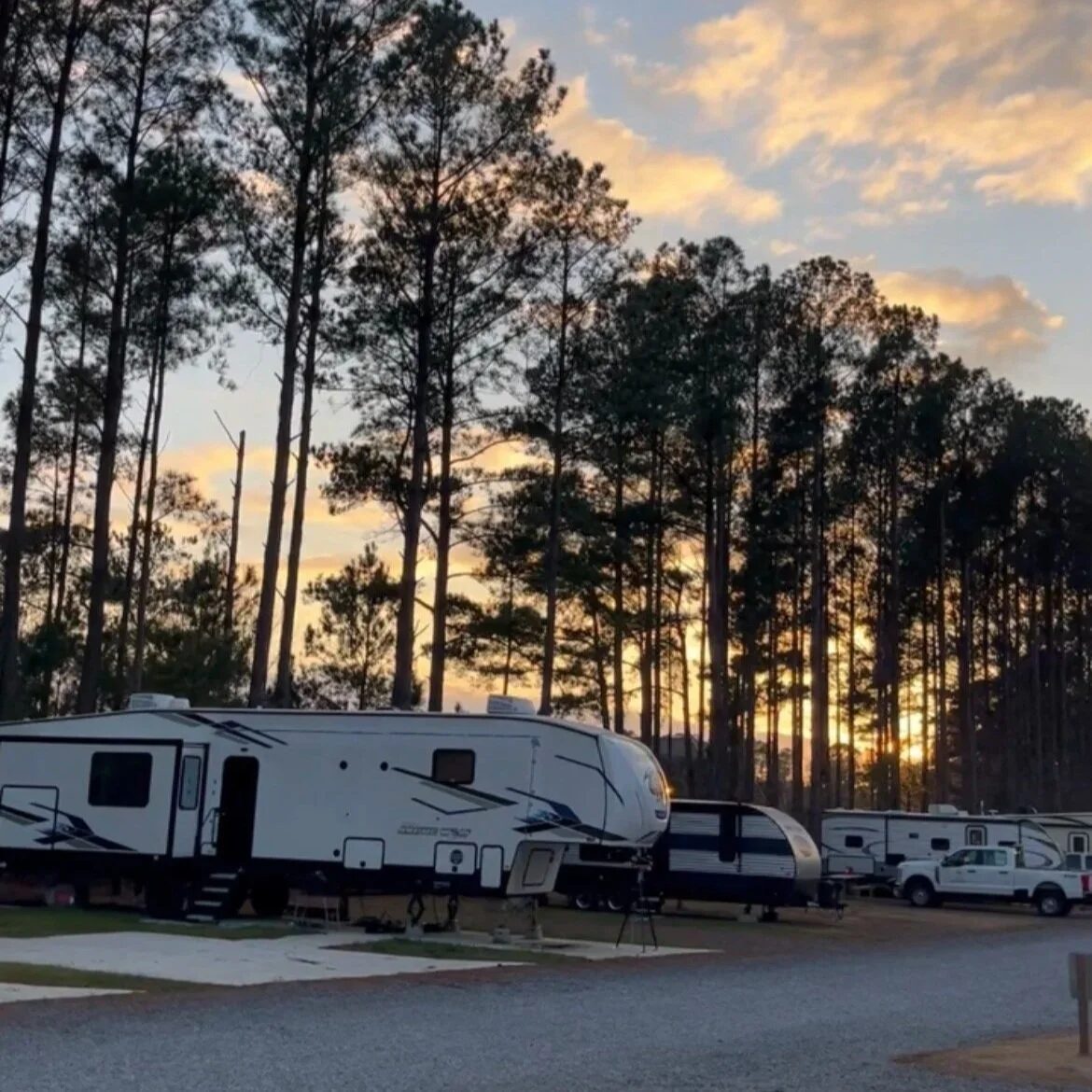
A straightforward first site, with help forty feet away
Full-hookup sites with 50-amp power, wide gravel roads and room beside the rig. Or borrow ours: the rental RV sleeps eight and is set up before you arrive.
And if this really is your first trip, say so when you book. We will walk you through the hookups and help you get the camper set up, and your first stay with us is 15% off with the code RVNEWBIE.